Free AI Conclusion Generator
Generate compelling conclusions for articles and blog posts using AI. Enter your topic and main points to get a conclusion that summarizes key ideas and provides closure.
Generated Conclusion
How to use: Review the generated conclusion and copy it to use at the end of your article or blog post. You can edit it as needed to match your writing style and requirements.
Error
How Orchly AI Conclusion Generator Works?
3 simple steps to generate compelling conclusions for articles and blog posts.
1 Enter Your Topic
Type in your article topic or title. Optionally provide main points discussed and context about the content type.
2 AI Generates Conclusion
Our AI analyzes your topic and main points to generate a compelling conclusion that summarizes key ideas and provides closure.
3 Copy & Use Conclusion
Copy the generated conclusion and use it at the end of your article, or edit it to match your writing style.
Why Use AI Conclusion Generator
Generate compelling conclusions instantly. Save time and create impactful endings for your articles and blog posts with AI-powered conclusion generation.
Instant Generation
Generate compelling conclusions in seconds instead of spending time crafting the perfect ending.
Summarizes Key Points
Get conclusions that effectively summarize main points discussed in your article.
Provides Closure
AI-generated conclusions provide a sense of completion and reinforce your main message.
Context-Aware
Optionally provide main points and context to get conclusions tailored to your specific content.
Ready to Use
Get conclusions that are complete and ready to use, or easily editable to match your writing style.
Free to Use
Generate unlimited conclusions. No credit card required, no sign-up needed.
How to Write Compelling Conclusions That Leave an Impact
A strong conclusion is essential for effective writing. Well-crafted conclusions summarize key points, reinforce your main message, and provide closure that leaves readers satisfied.
Summarize Key Points
Effective conclusions briefly recap the main points discussed in your article.
This helps reinforce what readers learned and reminds them of the key takeaways.
Don't introduce new information—focus on summarizing what was already covered.
Reinforce Your Main Message
Your conclusion should reinforce the central thesis or main message of your article.
This helps readers remember what your content was about and why it matters.
Make the connection between your main points and the overall message clear.
Provide Closure
A good conclusion provides a sense of completion and closure.
It signals to readers that you've finished making your points and wraps up the discussion.
Use transition phrases like "In summary," "To conclude," or "In conclusion" to signal the ending.
End with Impact
Consider ending your conclusion with a strong, memorable statement.
This could be a call to action, a thought-provoking question, or a powerful final thought.
A strong ending leaves readers with something to remember or act upon.
Match Your Content Type
Different types of content require different conclusion styles.
Blog posts may end with a call to action or invitation to engage.
Academic papers typically summarize findings and suggest future research.
Marketing content often ends with a clear next step or offer.
Keep It Concise
Most effective conclusions are 100-200 words long.
They should be long enough to summarize key points but short enough to maintain reader interest.
Avoid repeating everything—focus on the most important points.
Review and Refine
After generating a conclusion, review it to ensure it flows well with your article.
Make sure it accurately summarizes your main points and reinforces your message.
Small edits can significantly improve the conclusion's impact.
Go Beyond Conclusion Generation with Orchly.ai
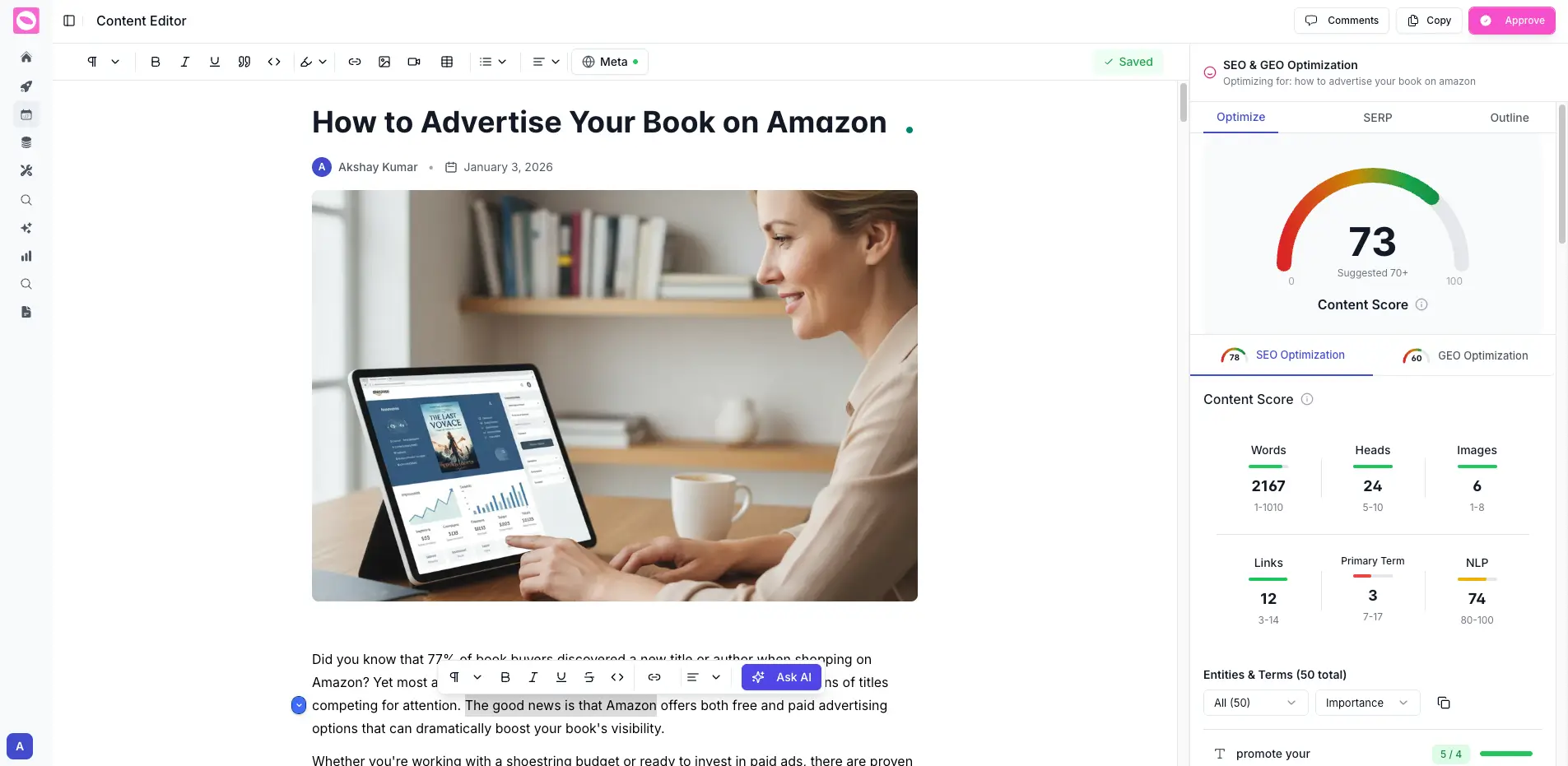
While conclusion generation helps, comprehensive content optimization requires more.
Orchly.ai helps you optimize your entire content strategy, from conclusion-level improvements to full-page optimization, SEO, and AI search visibility.
Frequently Asked Questions
Everything you need to know about the AI Conclusion Generator.
Simply enter your article topic or title, and optionally provide main points discussed and context about the content type. Our AI analyzes it to generate a compelling conclusion that summarizes key points, reinforces your main message, and provides closure.
Yes! Our AI Conclusion Generator is completely free. You can generate unlimited conclusions without any cost, credit card, or sign-up required.
Generated conclusions are typically 100-200 words long, which is the ideal length for most content types. They effectively summarize key points, reinforce your main message, and provide closure.
Yes! The generated conclusion is provided as plain text that you can copy and paste into any text editor. You can then modify, add, or remove content as needed to match your writing style and requirements.
Providing main points is optional but highly recommended. It helps the AI generate conclusions that accurately summarize what was discussed in your article. If you don't provide main points, the AI will create a conclusion based on the topic alone.
Absolutely! The AI Conclusion Generator works for any article topic. Whether you're writing blog posts, articles, academic papers, marketing content, or other written pieces, the AI will create an appropriate conclusion.
No, the conclusion will not introduce new information. It focuses on summarizing the key points you've already discussed and reinforcing your main message. This follows best practices for conclusion writing.
The tool generates one conclusion per request. Review it to ensure it accurately summarizes your main points and reinforces your message. Copy it and paste it at the end of your article, making small edits as needed to match your writing style.