Free AI Crawlability Checker
Check if AI search engines and crawlers like Googlebot, GPTBot, Claude, and Perplexity can read your website. Run a free AI crawlability and indexability test.
Analyzing your website
Can AI crawler read this page?
Search Engine & AI Crawler Access
Content Analysis
Technical Details
Recommendations
Analysis failed
How the AI Crawlability Checker Works
3 simple steps to check if AI search engines can read your website.
1 Paste your website link
Paste your website link to start the crawlability check.
2 We fetch and analyze
We fetch your HTML content, robots.txt, and sitemap to understand crawler access.
3 Get clear results
Get clear results showing whether AI and search crawlers can read your site.
Why AI Crawlability Test is needed?
AI tools like ChatGPT, Claude, and search crawlers like Googlebot need to see and read your content before they can use it. If they cannot access your page, your content will not show up in AI answers or search results.
Crawlability drives indexing
Crawlability affects whether your pages are discovered and indexed. Google's documentation says crawlability is the first step before a page can appear in search results.
Silent bot blocks hurt visibility
Technical issues and bot blocks can silently stop crawlers from reading your site. Around 10% of websites face crawl blocking issues that prevent proper crawling without the owner knowing.
AI search needs access too
Good crawlability helps AI tools like GPTBot and ClaudeBot find your content, understand it, and reference it in AI search answers and chat responses.
robots.txt signals matter
A misconfigured robots.txt can accidentally block Googlebot or AI crawlers from reading your entire site. This tool shows exactly which bots are allowed or blocked.
Structured data improves AI understanding
Pages with JSON-LD structured data give crawlers additional context about your content, making it easier for AI systems to reference and cite your pages correctly.
Fast, free, no signup needed
Paste a URL and get a full crawlability report in seconds, including bot access, content signals, and actionable recommendations to fix any issues found.
What we check during analysis
Every crawlability report covers the key technical signals that determine whether AI and search crawlers can read your page.
Content accessibility
We look at the visible text on your page that bots can read without JavaScript or styles applied.
robots.txt signals
We check if your robots.txt file exists and whether it blocks key crawlers like Googlebot, GPTBot, or ClaudeBot.
AI bot access
We detect whether common AI crawler user agents including GPTBot, ClaudeBot, and PerplexityBot are allowed or blocked.
Page response behavior
We check how your page responds when accessed, looking for issues that might make bots time out or fail to load content.
Meta information
We extract your title and meta description so you can see how clearly your page is described for AI and search engines.
Structured data signals
We look for JSON-LD or schema markup that helps bots understand your content context and improves AI search visibility.
How to Go Beyond a Simple AI Crawlability Test
How to Read Your Results: Your report shows whether bots are allowed or blocked for each signal checked.
If something is marked as blocked or inaccessible, it means AI systems or search engines may have trouble reading that part of your site.
Use these results to fix issues so your important pages become easier to crawl and more likely to show up in AI answers and search results.
Orchly.ai picks up where this test stops.
Once your site is crawlable, Orchly helps you track how visible your brand actually is across Google and AI search platforms like ChatGPT, Claude, Gemini, and Perplexity.
It then gives you automation to improve that visibility by optimizing content, fixing gaps, and creating new pages based on how AI systems respond.
This way, you move from a one-time check to continuous AI search growth.
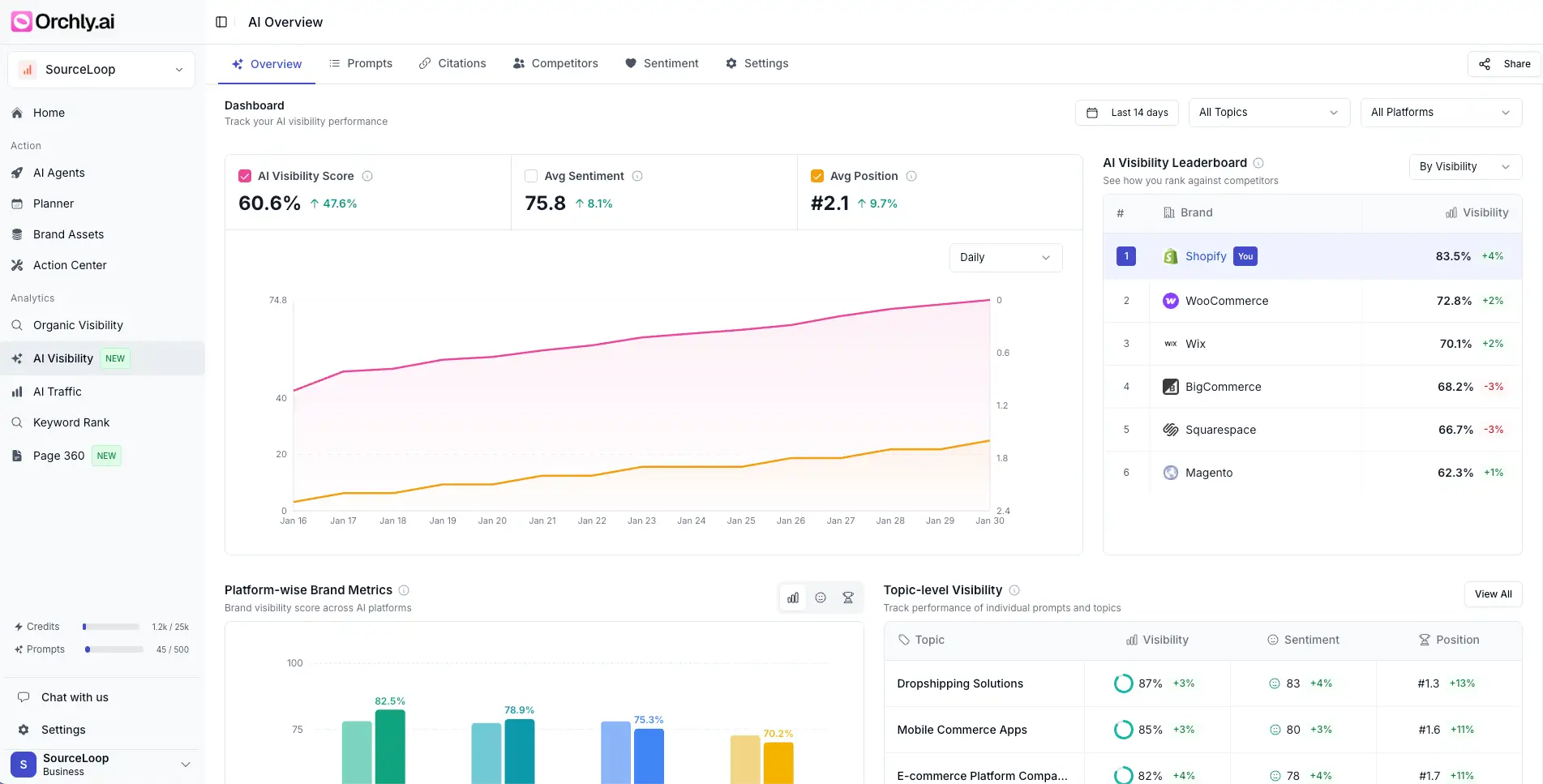
Orchly AI Visibility Tracker
Orchly monitors your brand mentions and visibility across ChatGPT, Claude, Gemini, and Perplexity. You can see exactly when and how AI tools reference your site, and track changes over time.
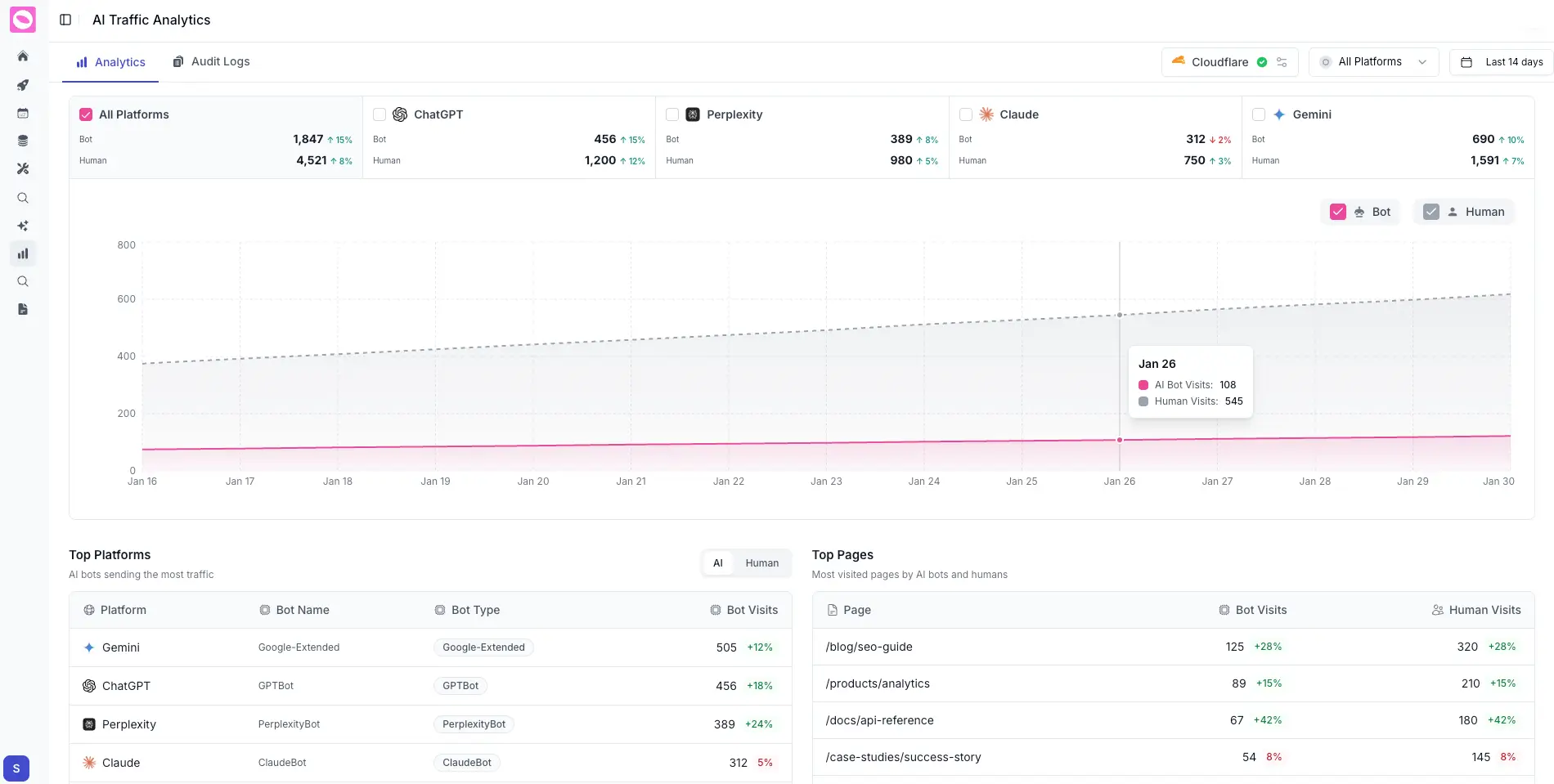
Orchly AI SEO Agents
Beyond tracking, Orchly's AI agents automatically identify content gaps, optimize existing pages, and create new content designed to appear in AI-generated answers across multiple platforms.
Everything you need to know about AI crawlability.
Common questions about crawler access, robots.txt, and AI search visibility.
You can test your site with a crawlability or AI access checker tool to see if major crawlers like Googlebot, GPTBot, or PerplexityBot are allowed or blocked by your robots.txt and headers. Paste your URL above to get a free report in seconds.
That depends on your goals. Blocking AI bots may protect content usage, but it also limits your visibility in AI-driven search and answer platforms. Many site owners choose to allow trusted bots to boost reach in places like ChatGPT, Perplexity, and Google's AI Overviews.
Common blockers include incorrectly configured robots.txt, server errors (403, 404), slow responses, and content delivered only via JavaScript, which many AI bots cannot execute. This tool checks for all of these signals automatically.
Reputable crawlers generally respect robots.txt instructions, but compliance can vary. Robots.txt is a widely followed standard, but not all bots enforce it in exactly the same way. Googlebot and OpenAI's GPTBot are known to respect robots.txt directives.
Content density is the ratio of readable text to total HTML code on a page. A very low ratio often means the page is JavaScript-heavy and that crawlers may not see much useful content in the initial HTML response. Search engines and AI bots read HTML, not JavaScript-rendered content in most cases.