Step 1
User input a complex, conversational question
New chat 


 4 engines
What’s the best CRM for a small business that works with Gmail and QuickBooks?
Search
Same question, sent to every engine you track.
Query Fan-Out Analysis
See how ChatGPT, Perplexity, Claude and Gemini break complex queries into sub-queries, and optimize your content to match.













The query fan-out process
AI platforms split a question into sub-queries, search them in parallel, and combine the results into one answer. Knowing this helps you optimize content for AI visibility.
4 engines
What’s the best CRM for a small business that works with Gmail and QuickBooks?
Same question, sent to every engine you track.
ChatGPT
ChatGPT HubSpot CRM is a strong pick for small businesses: it’s free to starthubspot, connects to hundreds of appszapier and keeps pipelines simpleg2.
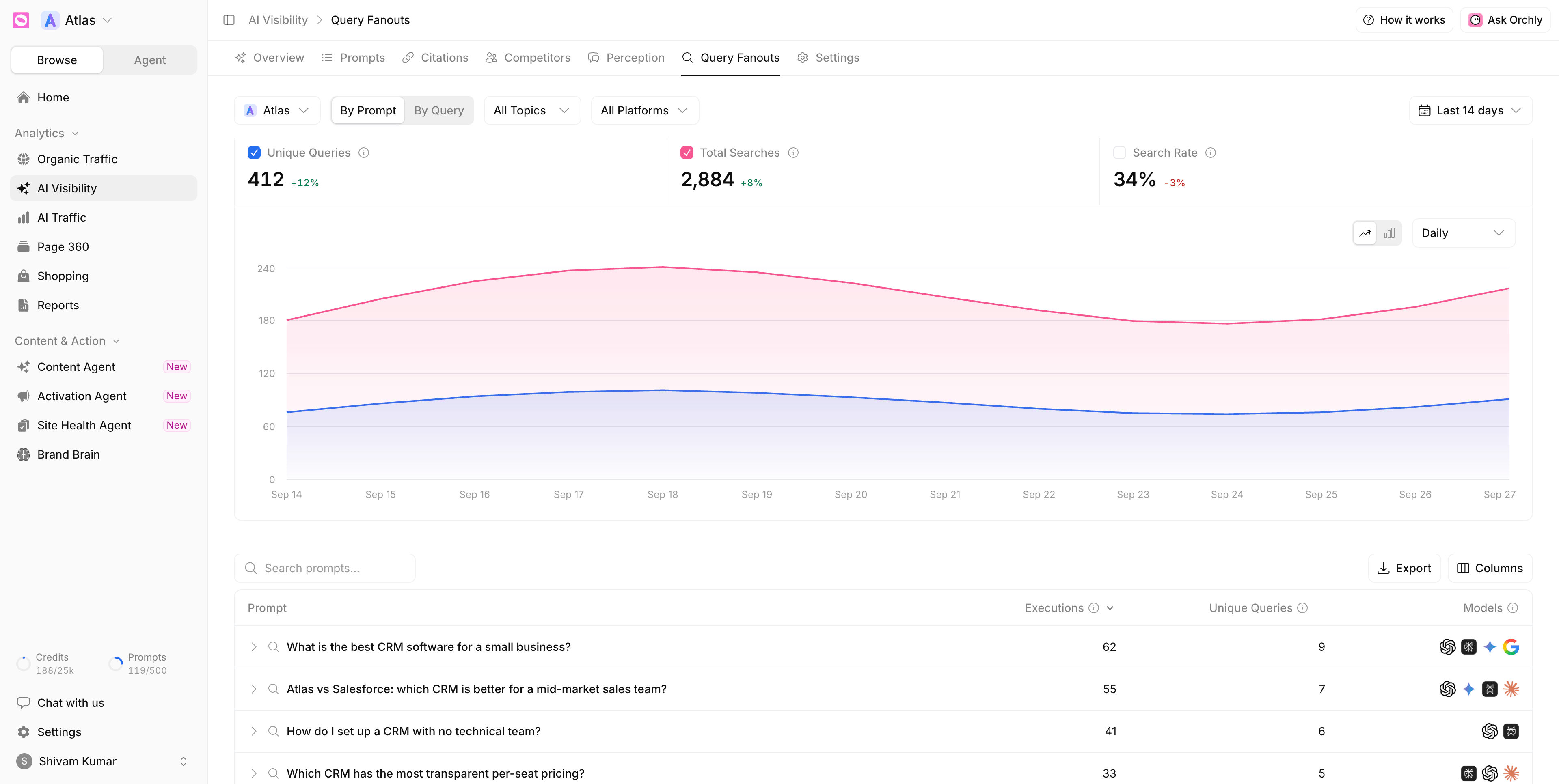
Query fan-out is the process by which AI platforms like ChatGPT, Perplexity, Claude, and Gemini decompose complex user queries into multiple sub-queries. For example, a query like 'Best CRM for small businesses' might be broken down into sub-queries about pricing, integrations, features, and reviews.
It varies with the prompt. A simple question may trigger one or two searches, while a broad comparison can trigger many more. The Query Fanouts tab shows the actual sub-queries behind each of your tracked prompts and how often each one came up.
Understanding query fan-out helps you optimize your content to match how AI platforms break down queries. By covering all sub-queries in your content, you increase the chances of being cited in AI-generated answers and improve your visibility in AI search results.
Yes. Each engine expands a prompt in its own way, and only some engines expose those sub-queries. Orchly surfaces fan-out mainly from ChatGPT and Perplexity today, and the Models column shows which engine produced each sub-query.
By analyzing query fan-out patterns, you can identify which sub-queries are commonly generated for topics in your industry. Create comprehensive content that addresses all sub-queries, increasing your chances of being cited in AI-generated answers.
Topic coverage measures how well your content addresses all the sub-queries generated from a complex query. Higher coverage means your content is more likely to be cited in AI answers. Our tool shows you your coverage percentage and identifies gaps.
Fan-out comes from the prompts you track. Add prompts your competitors win, such as comparison or "best X for Y" questions, and their sub-queries appear in the Query Fanouts tab with your visibility on each one.
Daily. Sub-queries are collected each time your tracked prompts run, so the list grows as new questions come up. Sort by Times Used to see the ones engines ask most.