












Track the questions people ask about you “is it legit”, “vs” and “best brands for” prompts



For brand & PR teams
Ask ChatGPT if your company is legit and it quotes press, Wikipedia and Reddit. Track that answer on every AI engine and the sources behind it.
Orchly shows what every AI engine says about your brand, traces each claim to its source, and turns missing coverage into a pitch list.
What brand & PR teams watch
The questions people ask about you, how each engine describes you, the outlets it trusts, and where you stand next to rivals.


Perplexity 49%
Perplexity Get a free analysis of your brand visibility in AI tools like ChatGPT, Gemini, Perplexity and more.
From monitoring to action
Find the page behind a bad answer, pitch the outlets AI already trusts, and give leadership a report they can read in two minutes.
Reviewers like the feel, but note that Halden charges a $99 return fee during its 100-night trial.
Did the launch coverage change how ChatGPT describes us?
Sentiment rose to 74 from 68. Two of its new strengths come from launch articles.
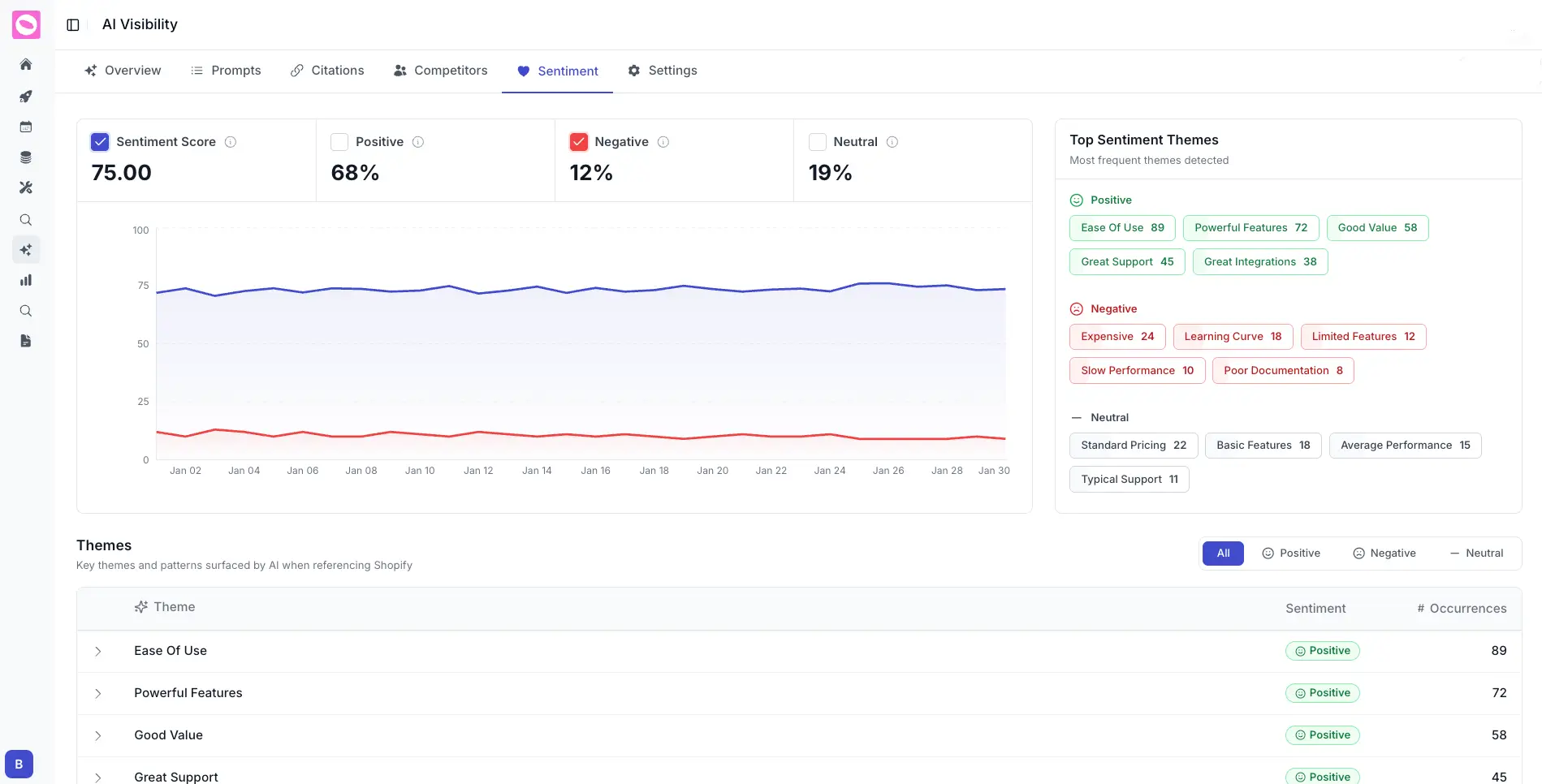
Track the questions people actually ask about you, such as “is [brand] legit”, “[brand] reviews” or “[brand] vs [rival]”. Orchly runs them on ChatGPT, Perplexity, Gemini, Claude, Grok, Copilot, Google AI Overviews and AI Mode, and keeps every answer so you can read it in full, with your position, the sentiment and the sources cited. See AI search monitoring.
AI engines don’t take correction requests the way an editor does. They repeat what their sources say, so you fix the source. In Orchly, open the theme in Sentiment, read the response that carries the claim, and check its Driving Sources for the page it came from. Then ask that publisher for an update, refresh the page if it’s yours, or publish a clear answer on your own site, and watch the next runs.
It depends on your category and the engine, which is why Orchly records it for your own prompts. The Citations tab lists every page AI pulled from, its content type (news article, listicle, product page and so on), how often it’s cited and whether your brand is on it. Expect a mix of press coverage, Wikipedia, Reddit threads, review sites and roundup articles.
GEO (generative engine optimization) is the work of shaping what AI engines say. For brand and comms teams it looks a lot like earned media: engines lean on third-party pages to describe you, so the coverage, reviews and threads you earn are what they quote. Orchly ranks those outlets by how often AI actually cites them.
Add your rivals and Orchly shows how often each brand is named across your tracked prompts, per engine, per topic and per prompt. The Sentiment tab adds a head-to-head view: both brands scored out of 100, with what each is known for and the concerns AI raises about each.
It helps you see how far it has spread into AI answers. The sentiment trend shows a dip when it starts, and you can filter by engine to see which one picked it up. Social Listening flags Reddit threads that rank in Google or already show up in AI answers, and you can schedule an agent to check visibility and post a summary to Slack.
Yes. Build a report with AI visibility, citations, sentiment and social listening, then send the live link or download a PDF for the deck. See the AEO and GEO report builder.
Yes. Each client gets its own workspace with its own prompts, competitors and reports, and reports can carry your agency’s logo. More on the agencies page.