Branded vs non-branded keywords explained
What branded and non-branded keywords are, why the split matters, and how to separate them in Orchly to see your true organic growth.
Branded keywords are searches that include your brand name, like “Orchly pricing” or “Orchly vs Semrush.” Non-branded keywords don’t mention you at all, like “ai visibility tracker” or “how to track chatgpt rankings.” The two behave so differently that lumping them together hides what’s really happening with your SEO.
This guide explains the difference, why the split matters, and how to separate the two in Orchly so your reports show real growth.
Why the branded vs non-branded split matters
People who search your name already know you. That traffic converts well, but it mostly reflects demand you’ve already earned through word of mouth, ads, or past content. It goes up when your brand gets more popular, not necessarily when your SEO improves.
Non-branded traffic is the opposite. Nobody searching “sugar free sweets wholesale” knows you yet. Ranking for those terms is how you reach new people, so non-branded clicks are the truest measure of SEO progress.
If a big campaign sends branded searches soaring, your total organic clicks look great even if non-branded traffic is flat. Splitting the two stops you from celebrating growth your SEO didn’t actually drive.
How to separate them in Orchly
Orchly does the split for you once you tell it which terms are yours. Open Organic Traffic, go to the Settings tab, and find Branded Keywords.
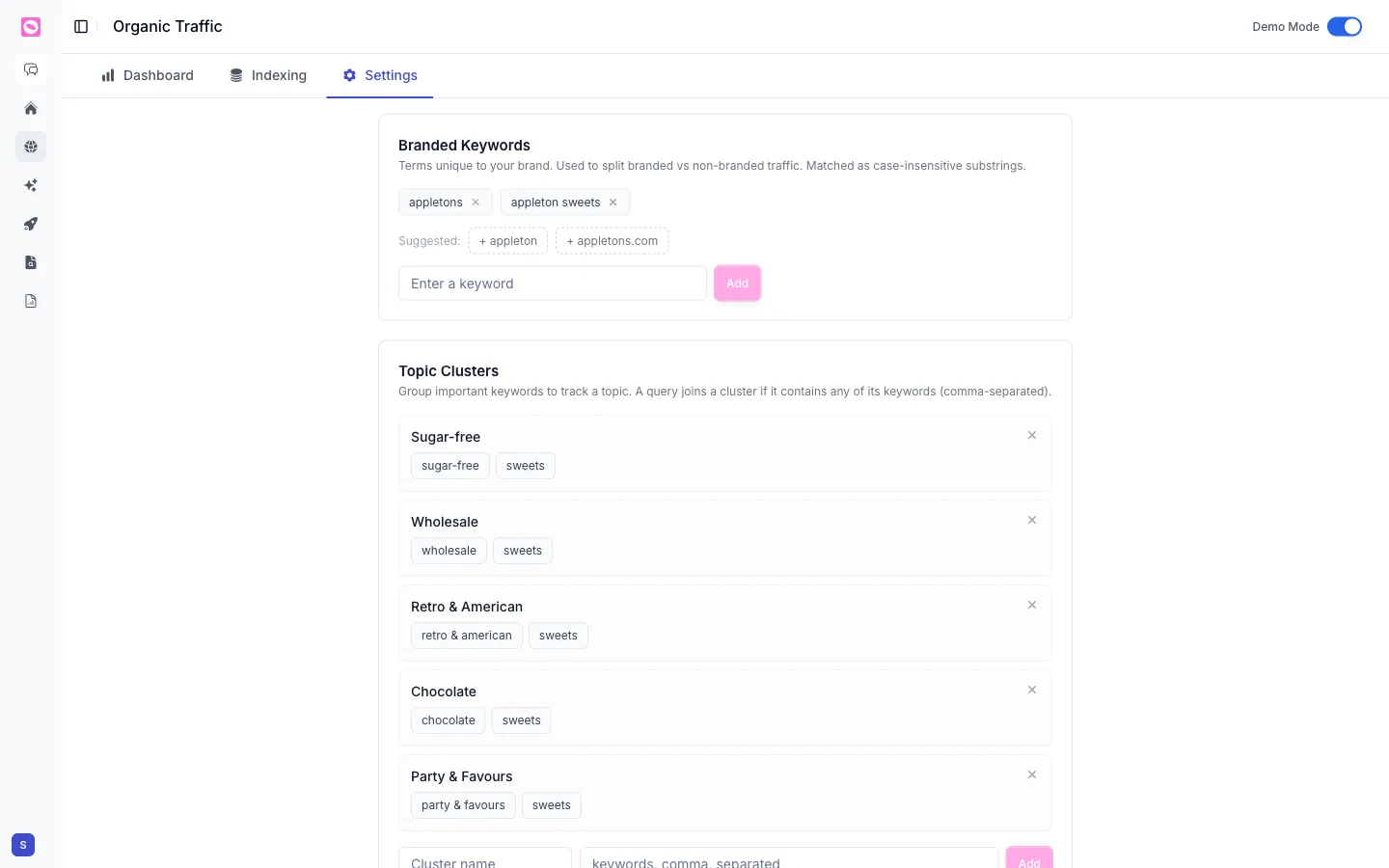
- In Branded Keywords, type a term unique to your brand and click Add.
- Add every variation people use: your name, common misspellings, your old name if you rebranded, and your domain.
- Accept any Suggested terms Orchly proposes if they fit.
Orchly matches these as case-insensitive substrings, so “appletons” also catches “appleton sweets” and “buy appletons online.” Any query containing one of your branded terms counts as branded; everything else is non-branded.
Misspellings and spacing matter. If people search “orchley” or “orchly ai,” add both. The more variations you capture, the cleaner your non-branded number, and that’s the number that proves your SEO is working.
Read the split
With branded terms set, your dashboard can separate the two streams. Watch non-branded clicks and impressions as your SEO scorecard, and keep an eye on branded as a proxy for overall brand demand. See the organic search dashboard for where these show up.